For almost one full year, the federal government under the APC has held back billions of naira meant for local governments in Osun State.
This money should fix roads, pay workers, help schools, and support pensioners. Instead, it sits frozen in accounts at United Bank for Africa (UBA). People suffer every day.
As I have consistently highlighted in my previous articles, the APC-led federal government’s handling of these funds intended for grassroots development has sown seeds of discontent that are now sprouting into widespread protests. The recent actions by market women and retirees underscore this reality, and mark my words: more unrest is on the horizon, potentially drawing in international scrutiny.
Let’s rewind to the core issue. Local government allocations, derived from the Federation Account, are meant to empower Nigeria’s 774 local councils to deliver essential services like road maintenance, healthcare, and education.
However, disputes over control have led to withholdings, often justified by legal battles or administrative hurdles. In Osun State, for instance, Governor Ademola Adeleke has publicly demanded the release of over N130 billion in statutory allocations, accusing United Bank for Africa (UBA) of unauthorized access to council accounts. This echoes a broader national malaise where funds are trapped in bureaucratic limbo, sometimes for up to a year, depriving communities of vital resources.
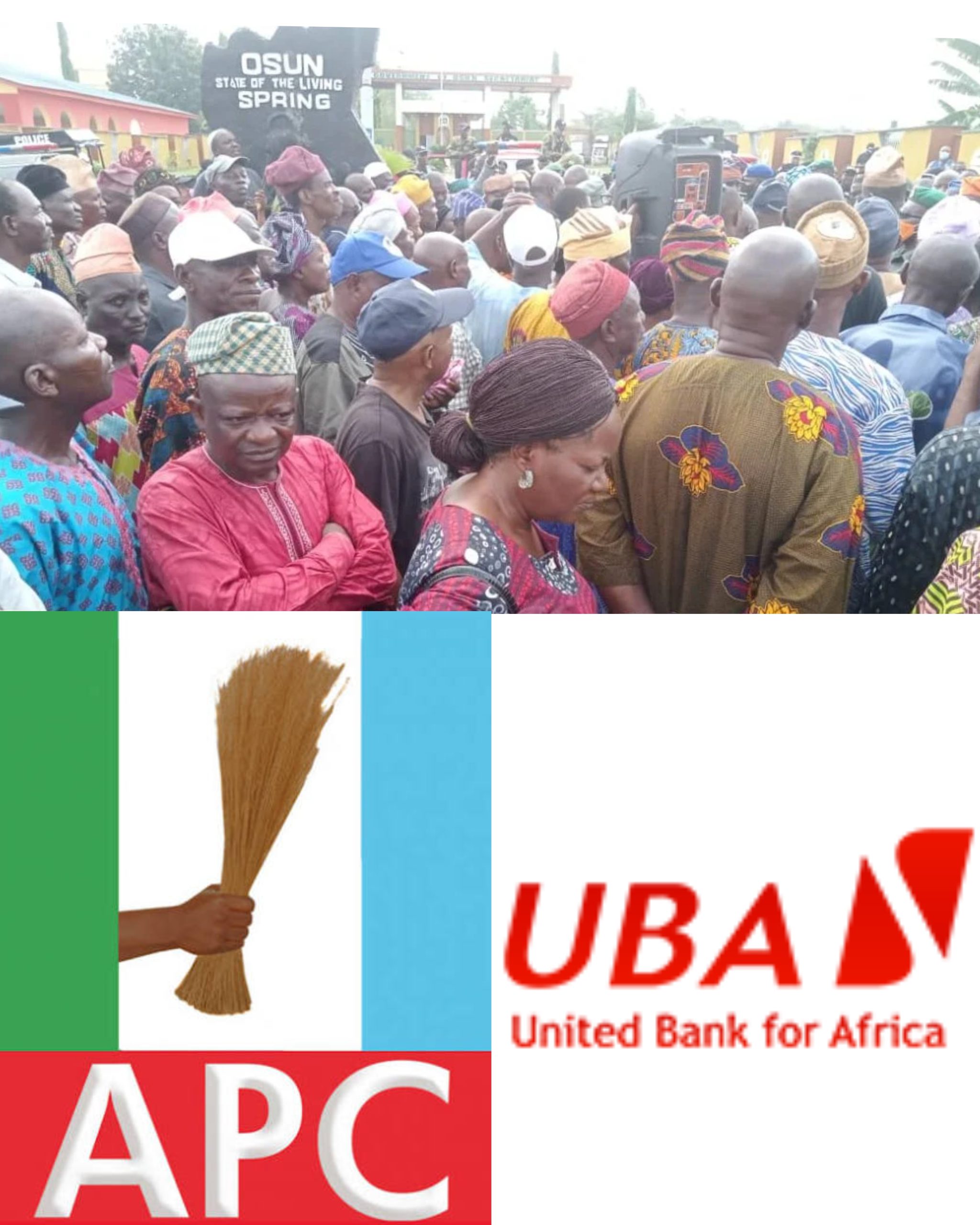
Market women, the backbone of Nigeria’s informal economy, have taken direct action by storming branches of United Bank for Africa (UBA) in Osun State. As customers of the bank, they protested and threatened and in many cases began closing their personal accounts to pressure UBA into facilitating the release of the withheld local government funds (amounting to billions of naira) to the lawful executives. Their demonstration is not just about money; it’s a cry against the systemic neglect and economic hardship caused by the impasse, which leaves traders struggling amid poor money circulation at the grassroots while funds remain frozen. As I predicted in my earlier pieces, such actions were inevitable. These women, who pay daily fees to market unions and local governments, are fed up with a system that extracts from them without reciprocating basic services or development.
Their protest highlights how the withholding exacerbates economic hardship, fueling inflation and poverty at the local level.
This isn’t isolated; nationwide, pensioners have protested non-payment of allowances and demanded reforms to schemes like the contributory pension system. Their grievances stem from the same root: withheld funds that should fund retiree benefits, leaving elderly citizens in dire straits. As I noted previously, protests from all walks of life are bound to erupt when basic entitlements are denied.
But this is just the tip of the iceberg. The APC government’s policies, including executive orders redirecting oil and gas revenues to the Federation Account, aim to streamline distributions but have instead amplified tensions. Local governments are now pushing for direct payments, bypassing state controls, as states rake in trillions from the Federation Account Allocation Committee (FAAC). Yet, in states like Osun and Rivers, withholdings persist, with courts intervening to freeze accounts and federal releases going to sole administrators. Criminal cases against UBA in Osun further illustrate the escalating legal and public battles.
I foresee a cascade of protests from diverse sectors. Teachers, healthcare workers, and youth groups already strained by economic woes will likely mobilize next. Imagine civil servants in Lagos or Abuja marching against delayed salaries linked to these funds, or farmers in rural areas blockading roads over unbuilt infrastructure.
The pattern is clear: as the withholdings drag on, approaching a full year in some cases, frustration boils over.
And with Nigeria’s history of social unrest, from #EndSARS to fuel subsidy removals, this could snowball into nationwide demonstrations.
Moreover, international bodies are poised to intervene. Organizations like the World Bank, IMF, and African Union have long advocated for transparent fiscal management in Nigeria. Withheld allocations undermine Sustainable Development Goals on poverty reduction and governance.
If protests intensify, expect reports from Amnesty International or Human Rights Watch condemning any crackdowns, potentially leading to sanctions or aid conditions.
The U.S. and EU, already monitoring Nigeria’s democratic health amid political defections and tensions, could amplify calls for accountability.
The APC government must heed these warnings. Releasing the funds transparently isn’t just a legal obligation, it’s a necessity to avert chaos. As I’ve said before, protests are the people’s last resort when dialogue fails. More are coming, and ignoring them risks not just domestic turmoil but global isolation. The time for action is now, before the storm fully breaks.
E-signed: Hon Comrade James Onifade
Advocate for Good Governance and A Better Judicial System