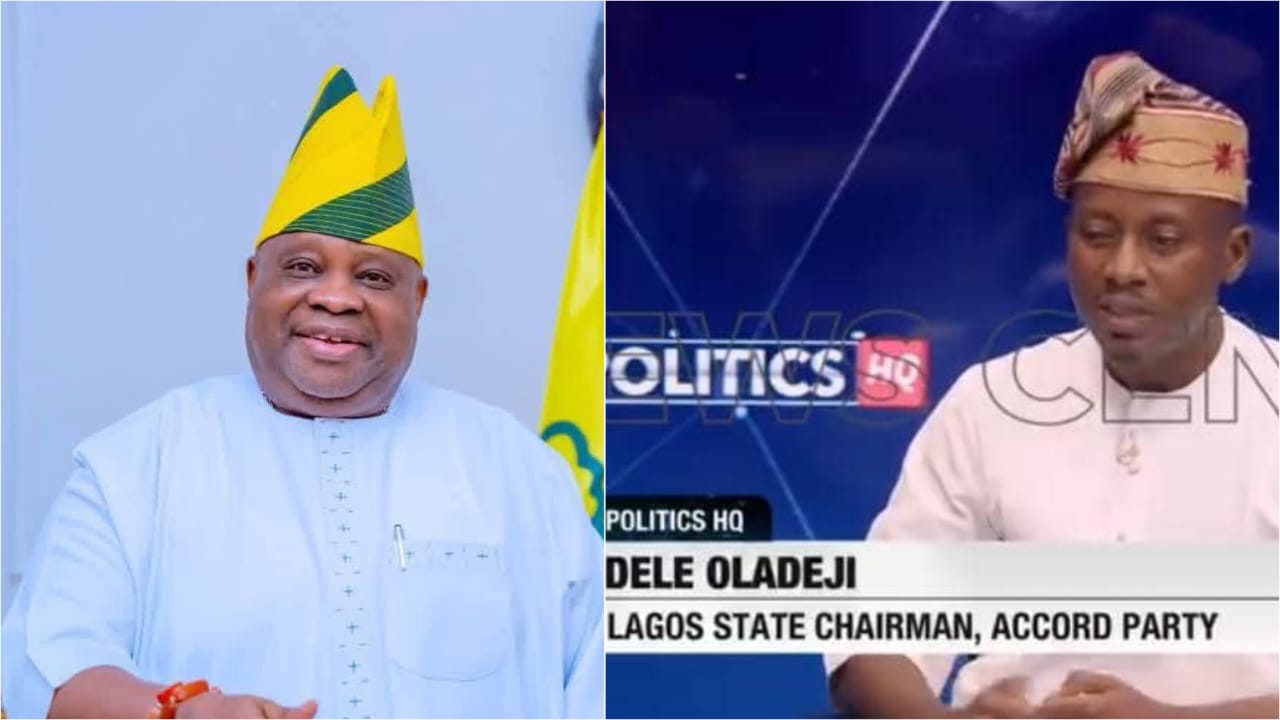
The attempt by the Lagos State Chairman of the Accord Party, Mr. Oladele Oladeji, to demand clarification over Osun State Governor Ademola Adeleke’s reported appointment as coordinator of President Bola Tinubu’s 2027 presidential campaign in Osun State raises questions about political boundaries, democratic freedom, and the right of elected leaders to make independent political decisions.
It is important to ask Mr. Oladeji a simple question: From whom exactly does he expect clarification? Is Governor Adeleke not entitled to determine his political direction and decide whom to support in his own state?
Governor Adeleke is the democratically elected governor of Osun State, and his political decisions should not be seen as an invitation for unnecessary interference from political actors outside the state. While political leaders are free to disagree with one another, such disagreements must not be mistaken for the authority to dictate how another leader should exercise his political choices.
The Lagos Accord chairman lacks the moral standing to question Adeleke’s political direction without establishing a legitimate basis for his intervention.
The fact that Oladeji chairs a political party in Lagos State does not automatically give him the authority to demand explanations from the Governor of Osun over his political preferences. Every political actor has the right to express an opinion, but that right should not be confused with an entitlement to interrogate another leader’s decisions.
Democracy thrives on freedom of association, political choice, and the ability of individuals and leaders to determine their preferred alliances within the framework of the law. Governor Adeleke, like every other political leader, has the right to decide which candidate or political platform he wishes to support, subject to applicable electoral laws and party rules.
If other political leaders are free to endorse candidates, negotiate alliances, and determine their political interests, it is difficult to understand why Adeleke’s reported support for Tinubu should attract demands for clarification from a party chairman based in another state.
Political consistency also requires that the same standard be applied to everyone. Those who defend the right of their own political leaders to make independent choices should be prepared to extend that same right to others, even when their decisions do not align with their own political interests.
Furthermore, the people of Osun State remain the ultimate judges of Governor Adeleke’s leadership and political decisions. They will assess his performance, weigh his choices, and determine their verdict through the democratic process. Political stakeholders from outside the state may express their views, but they should not attempt to turn personal or partisan disagreements into unnecessary political controversies.
Political disagreement is a normal feature of democracy, but it should never become an excuse to dictate the political direction of an elected leader.
Governor Adeleke does not need to seek political permission from the Lagos Accord chairman before deciding whom to support. If Oladeji disagrees with the governor’s reported position, he is entitled to state his reasons and defend his own political preferences. What he should not do is suggest that Adeleke owes him an explanation simply because the governor’s political choices do not meet his expectations.
At a time when Nigerians expect political leaders to focus on governance, accountability, and the welfare of citizens, public discourse should be guided by substantive issues rather than unnecessary controversies over who has the right to make political decisions.
The central issue is straightforward: political freedom must be respected, whether the decision concerns a politician we support or one whose choices we oppose.
Governor Adeleke has the right to determine his political direction, and the people of Osun State have the democratic right to judge him for it. No political disagreement should be allowed to undermine that fundamental principle.
Signed:
Comrade James Onifade
Advocate for Good Governance and Judicial Reform