…OSSAT Founder Questions Vienna-Listed Bond, Says Nigerians Deserve Results, Not More Debt
Nigeria cannot continue borrowing its way into prosperity without Nigerians asking one simple question: where are the results?
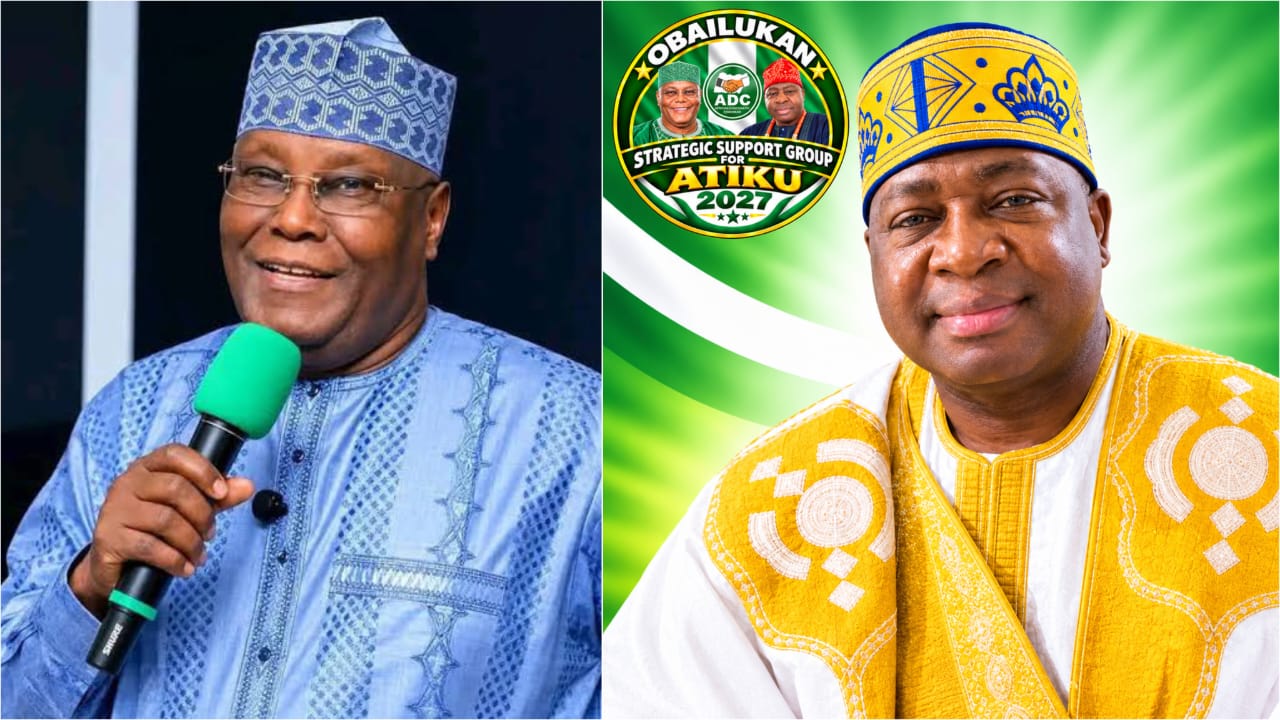
The proposed Vienna-listed bond arrangement has once again brought the Federal Government’s borrowing strategy into the spotlight. Former Vice President Atiku Abubakar has questioned why the government continues to seek additional financing while Nigerians are still demanding clearer answers about the country’s revenues and the use of resources generated under the present administration.
The bigger concern is not simply that Nigeria is borrowing. Borrowing can be legitimate when it finances productive investments that expand the economy, create jobs, improve infrastructure, and ultimately increase government revenue. The real concern is what Nigerians can point to as the tangible return from the accumulating obligations.
Nigeria’s Debt Management Office continues to publish public-debt figures, including data for March 2026, showing that borrowing remains a major part of the country’s fiscal picture. The government therefore owes Nigerians more than explanations about how much it can borrow; it owes them a clear account of what the borrowing is achieving.
Where are the industries creating millions of sustainable jobs? Where is the transformation in the purchasing power of ordinary Nigerians? Where is the infrastructure that should justify placing more obligations on future generations? Where is the dramatic improvement in the lives of families struggling to feed themselves? These are not abstract questions. They are questions being asked daily by Nigerians who wake up to the harsh reality of high living costs.
The World Bank has acknowledged that Nigeria has made progress on some macroeconomic indicators, including easing inflation and stronger fiscal and external positions, but it has equally stressed that household incomes have not fully recovered and that poverty remains high. The World Bank has also reported that food inflation disproportionately affects poorer households, many of whom spend a very large share of their income on food.
This is where the Tinubu administration must face the central criticism: economic statistics cannot become a substitute for economic relief. A government cannot continually tell citizens that reforms are working while millions of households are still struggling to cope with food, transportation, housing, healthcare, and education costs.
If more loans are secured, Nigerians have every right to ask whether those loans are producing productive assets or simply helping government finance an increasingly expensive system. Borrowing without visible development risks becoming a cycle: borrow today, spend, borrow again tomorrow, and leave the repayment burden for the next generation. That cannot be presented as sustainable development.
The administration has introduced major economic reforms, including the removal of the petrol subsidy and exchange-rate reforms. The World Bank notes that these reforms have contributed to improvements in some macroeconomic indicators, but reforms must ultimately be judged by their ability to translate economic stabilization into better livelihoods. And that is where the public conversation must become more serious.
Nigeria does not need a government that is simply skilled at raising money. Nigeria needs a government that can turn public resources into measurable development. The country is rich in human and natural resources. What Nigerians need is a clear direction for deploying those resources, reducing waste, expanding productive sectors, creating employment, and making the economy work for ordinary citizens.
The question is no longer merely, how much can Nigeria borrow? The question is, how much longer can Nigerians continue carrying the consequences of borrowing without seeing corresponding improvements in their daily lives? Every new borrowing proposal should therefore come with a clear explanation of its purpose, expected economic returns, implementation plan, and measurable benefits to Nigerians.
Nigeria cannot afford to operate on borrowed money and borrowed promises indefinitely. What the country needs is direction, accountability, productive investment, and measurable results — not an endless cycle in which government borrows today and Nigerians are left wondering tomorrow what the money accomplished.
For a nation already facing significant poverty, high living costs, and persistent infrastructure and employment challenges, the standard must be simple: every naira borrowed in the name of Nigerians should be capable of being traced to a meaningful public benefit. Anything less deserves rigorous scrutiny.
Signed:
Comrade James Onifade
Media Executive
Office of the Obailukan Strategic Support Group for Atiku (OSSAT)