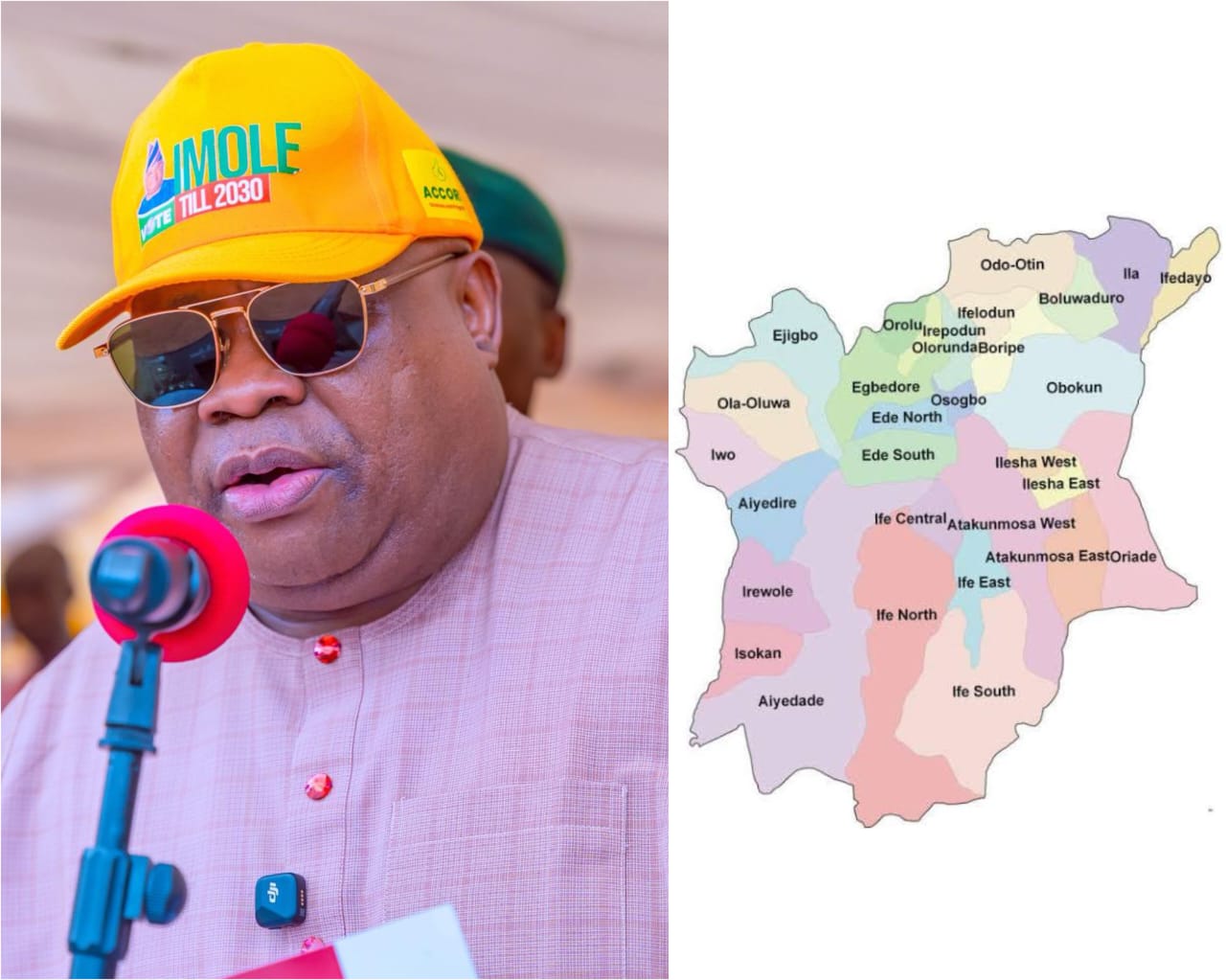
Comrade Onifade’s sharp response to the APC national machinery cuts through the noise of the Osun governorship contest with a simple, unapologetic assertion: the people of the state will decide, and they will decide for Governor Ademola Adeleke.
“If you like, bring the whole of Abuja, the Osun people shall vote overwhelmingly for Gov. Ademola Adeleke,” Onifade declared.
No matter how many national figures, campaign trailers, or mobilised outsiders the All Progressives Congress brings into Osun, they possess neither membership cards nor places on the voting queues. They therefore hold no electoral value that can override the will of those who actually live and vote in the state. On election day, that will shall prevail.
This is more than a campaign retort. It is a statement of democratic first principles at a moment when national party structures are working hard to redefine a local contest.
The APC has inaugurated large campaign councils, deployed governors and National Assembly members, and framed the 15 August election as a recovery mission.
Presence is not persuasion. Volume is not legitimacy. The voters who will determine the outcome are those with permanent voter cards in Osun’s 30 local government areas and 332 wards. They alone will decide whether Adeleke’s record justifies continuity or whether the APC candidate, Munirudeen Bola Oyebamiji (AMBO), offers a better alternative.
Osun has shown before that it is not easily cowed by national pressure. The 2022 election that brought Adeleke to office was closely fought and subsequently litigated. Local calculations about performance, personality, and lived experience carried more weight than the machinery arrayed against him.
That pattern remains relevant. National leaders can dominate the airwaves and fill rally grounds. They cannot stand in the queues or mark the ballots.
Any attempt to treat Osun voters as cargo to be moved by outsiders underestimates both their agency and their memory.
The current political terrain sharpens the point.
Adeleke is seeking re-election on the Accord platform after leaving the PDP. Accusations of intimidation, selective enforcement, and plans to undermine the process have flown in both directions. In such an atmosphere, the claim that external forces can overwhelm local preference risks sounding less like democratic competition and more like an effort to substitute national will for the people’s.
Nothing can prejudice the interest and will of Osun’s electorate on election day. This is therefore a necessary corrective. It places the burden where it belongs: on the candidates to persuade, not on outsiders to impose.
This does not amount to a prediction of certain victory for Adeleke, nor does it dismiss the APC’s capacity to organise.
Turnout, security conditions, the credibility of the electoral process, and the concrete records of both sides will all shape the result.
What Onifade correctly asserts is that electoral value is not imported from Abuja or elsewhere. It is earned among the people who will cast the votes. If the APC arrives in its millions, it still confronts the same electorate that has previously asserted its independence. The final word remains with them. That is how democracy functions when it is allowed to function.
Signed:
Comrade James Onifade
Advocate for Good Governance and Judicial Reform